With so many movies being labeled as "indie" nowadays, many arthouse films have been increasingly referenced by their esthetics rather than their actual independent value. Back in the 70s, it was still about films produced outside a major studio or media outlet, relying on limited resources and unconventional techniques to deliver a humble, yet one-of-a-kind cinematic experience.
It was in the 70s that great indie film movements took place and introduced many talented filmmakers to the world. Directors such as John Cassavetes and David Lynch were breaking boundaries by defying Hollywood conventions and influencing a generation of aspiring filmmakers to join the independent film movement. Here is the best indie movie of every year in the 1970s.
1970: Deep End

Deep End feels like one of the final remnants of the French New Wave, despite being a British production. That's because the references can be seen and felt in every frame, but not without filmmaker Jerzy Skolimowski effectively adding his own original voice to the story. The movie revolves around Mike, a teenage boy on the verge of his sexual impulses, and Susan, a gorgeous young woman working at a bathhouse. The two immediately hit it off, but their unusual friendship quickly escalates into something dangerously obsessive.
Deep End manages to be both a great coming-of-age movie and a heavy meditation on compulsion and desire. Chaos is the sole force that drives the narrative in unexpected directions, resulting in a highly artistic ending that is among the best of the decade.
1971: The Last Picture Show

Back in the '60s, it was impossible to think of such a thing as an indie western, but The Last Picture Show is pretty confident at what it's aiming at. Taking the premise of 1967's The Graduate to a desolated Texas town, the film revolves around the intersecting lives of a vibrant young generation and the leftovers of a dying West.
The characters are bigger than life and the chemistry between the cast is beyond compare, which explains why such a small-scale movie ended up earning eight Oscar nominations, with four directed to supporting roles. Anyone who grew up in a dead-end town and had serious doubts about the future will resonate with The Last Picture Show, and the way the movie connects such an extensive array of characters pays off with mastery.
1972: Pink Flamingos

John Waters knows he hit the nail on the head because Pink Flamingos isn't slightly less relevant and controversial now than it was in the early-70s, earning Waters the crown of king of campy, exploitative cinema. In the movie, real-life performer Divine plays a scandalous fictional version of himself, a drag queen who wants to exact revenge on a married couple trying to jeopardize her figure.
Pink Flamingos is a crime comedy like any other, and misery never looked so entrancing and exuberant as in this film. Waters accomplishes the ultimate achievement on the philosophy of trash, and Divine steals the show with an unforgettably dirty spectacle.
1973: American Graffiti

Even the mastermind behind one of the most influential movie franchises of all time gave a try in the independent scene. Before coming up with Star Wars, per Far Out Magazine, George Lucas was convinced by renowned director Francis Ford Coppola to experiment with a coming-of-age approach, and the result was the charming American Graffiti. Set in Modesto, California, where Lucas grew up, the movie perfectly captures the essence of the decade before, in a way viewers will almost feel intimately close to Lucas.
The movie recounts the city and its characters as it was for the filmmaker when he said goodbye, following a group of high school graduates spending one last memorable night before they set out to college to chase a promising future. There wouldn't be indie masterpieces such as Dazed and Confused or Fast Times at Ridgemont High without American Graffiti, and the fact the movie is such a personal accounting of a genius mind only makes it all the better.
1974: The Texas Chainsaw Massacre

There's an argument to be made that The Texas Chainsaw Massacre was the definitive movie that shaped what would become the slasher subgenre, pioneering a range of storytelling techniques that would influence generations of horror filmmakers. Right off the bat, the movie plays with reality and fiction by delivering an opening that suggests a genuine accounting of a true story, preparing viewers for a disturbing series of events that are different from everything the horror genre explored before.
The Texas Chainsaw Massacre is merciless, dirty, and frighteningly realistic, conveying with precision what it would feel like to be chased by a psychopathic killer. The final moments are pure nightmare fuel, and Tobe Hopper manages with such limited resources to establish an unmatched atmosphere of imminent danger and distrust.
1975: The Rocky Horror Picture Show

If every musical took as many narrative risks as The Rocky Horror Picture in 1975, the genre would still be overflowing with ideas now. Breaking boundaries and taboos, the movie is both a charming and outrageous journey into the heart of madness. Following a reluctant couple forced to seek shelter at Dr. Frank-n-Furter's residence, a transvestite scientist with wicked intentions, The Rocky Horror Picture conducts a unique horror experience with euphoric musical numbers, exuberant costumes, and a campy narrative that takes the audience to unexpected extremes.
1976: The Man Who Fell to Earth
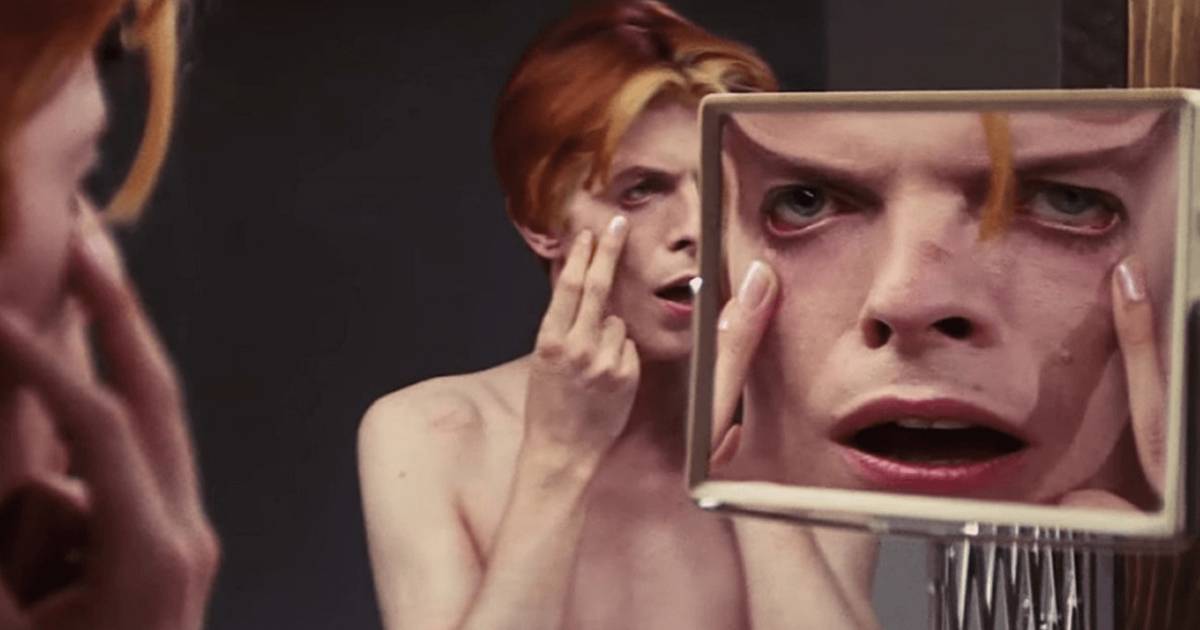
There's no arguing that David Bowie was born to play Thomas Jerome Newton, an alien who disguises himself as a human on Earth as he searches for a way to save his dying planet. The Man Who Fell to Earth is the perfect example of how sci-fi doesn't always need to be ambitious and groundbreaking, settling with a subtle and tamed narrative that gradually explores the magnitude of its fantastical elements. The movie could be labeled as fantastic realism; the unknown plays a key role in the narrative, yet it takes its time to draw the characters in and reveal its true facade.
1977: Eraserhead

Eraserhead offered the first glance at David Lynch's genius for the surreal and the obscure, telling a disturbing industrial tale about an ordinary man torn apart by an oppressive routine and the echoing screams of his weird-looking newborn baby. In fact, there are weird-looking characters in abundance here, as well as a permanently dreadful atmosphere that, added to Lynch's profoundly creepy imagery, delivers a perfect horror movie that aims at evoking discomfort rather than fear.
The movie is indie to its core, with a lack of reliable funds that resulted in a grainy, tawdry-looking aspect that ended up being Eraserhead's trump card. It's difficult to describe what watching the movie for the first time feels like, but it comes close to evoking the feeling of inhaling all the dirt from an abandoned house's dustiest object. With no conventional narrative whatsoever, Lynch invites the viewer to trust some of the most unreliable images ever captured, and it absolutely works.
1978: Dawn of the Dead

Nowadays, George A. Romero's name is so strongly tied to the horror genre that it's easy to forget that his influential zombie movies started as independent productions before reaching classic status. That's why movies such as The Night of the Living Dead, Dawn of the Dead, or Day of the Dead take place almost entirely in a single location; resources were too scarce, but Romero's mind was ambitious enough to take advantage of every artifice in hands.
1978's Dawn of the Dead might be the greatest zombie movie of all time because it puts at stake everything this horror subgenre would explore in the years ahead. It consists of an effectively constrained narrative dealing with an outbreak of global proportions. In the film, a group of strangers finds themselves trapped in a secluded mall, forced to deal with their differences and the horde of zombies that surround them from all sides.
1979: Camera Buff

A decade before Krzysztof Kieślowski's magnum opus, the Dekalog, and his impressive Three Color Trilogy, the Polish filmmaker nearly predicted what his career would be like in a few years with Camera Buff. The movie is centered around Filip, an ordinary man who buys a camera to record his newborn child. As he evolves into an amateur filmmaker, the prestige of festivals and acclaim from journalists leads to a dangerous family crisis.
In the film, the camera is an object both divine and tainted. The lens is both a gift and a curse. Filip had the best intentions, but once fame and glory get to him, he finds himself unable to stop filming, and everything around him looks like the perfect frame. Camera Buff is a movie that realistically deals with an unexpected obsession, addressing the fantasy of every person who contemplates the possibilities of the camera as a fresh new start.
Comments
Post a Comment